Biocracked
←

#muscle atrophy

2 articles
Approach: Macro science (tissue). Palette: B, warm.

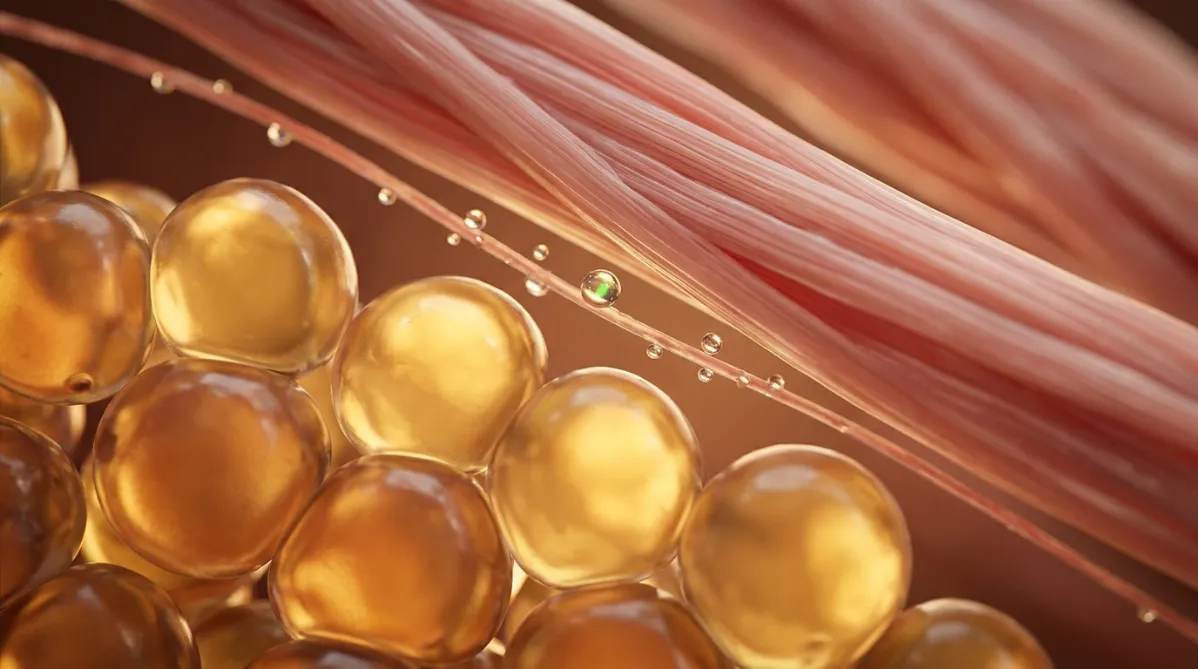
Extreme macro photograph in the style of a microscopy image, showing a cluster of rounded, translucent golden fat cells (adipocytes) in the foreground. Fine strands of pale pink-red muscle fibers run diagonally across the frame behind them. Between the two tissues, tiny glistening droplets drift along a thin capillary, suggesting a signal travelling from fat to muscle. Shot at a slight low angle with shallow depth of field, so the foreground cells are crisp and the muscle fibers melt into soft blur. Lit by warm amber backlight that makes the fat cells glow like honey, with copper-toned shadows and a faint rim of light on the fiber edges. One small electric green fluorescent speck sits inside a single droplet as the only cool accent. The mood is quiet, curious and intimate, with a sense of hidden communication inside the body.
longevity

Le messager d'origine adipeuse qui pourrait protéger les muscles lorsque le NAD⁺ augmente

BY NOVA CHEN ·

La plupart des personnes qui prennent du NMN ou du NR supposent que l’augmentation du NAD⁺ agit directement dans le muscle. Une étude murine publiée dans *Cell Metabolism* suggère que le tissu adipeux pourrait jouer le rôle d’intermédiaire caché, en libérant dans le sang une protéine protectrice appelée Serpina3n. Ce signal a limité l’atrophie musculaire dans des modèles de vieillissement, de désutilisation et de cachexie cancéreuse, probablement en maintenant une enzyme métabolique clé. Il s’agit toutefois de recherches animales ; les auteurs ont déposé un brevet et aucune dose ni bénéfice n’est encore démontré chez l’humain. Voici ce que cela signifie – ou non – pour votre routine.
**Approach: Macro science. Palette: D, bold color field.**

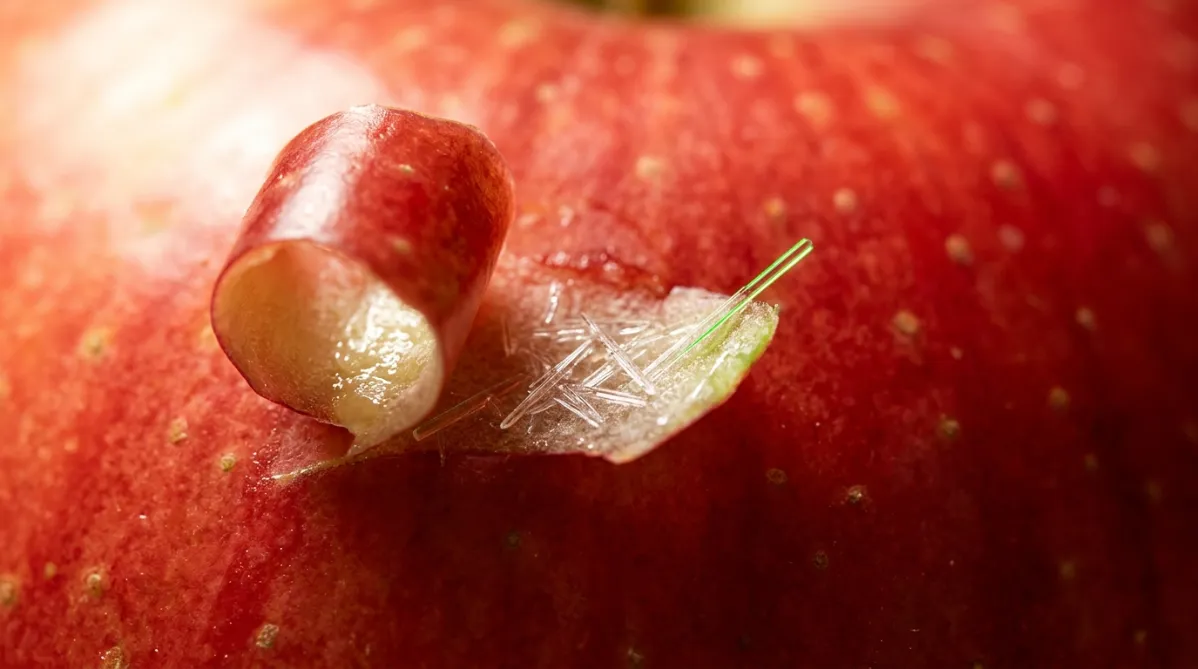
An extreme close-up macro photograph of the waxy surface of a red apple peel, with a small curl of peel lifted to show the pale, glistening underside. Fine, needle-like ursolic acid crystals sit in the wax bloom, catching the light as tiny translucent shards. The apple's skin fills the background in saturated tomato red with natural speckled lenticels. One thin electric green highlight glints along a single crystal edge. Shot at a slight 30-degree angle with a macro lens and very shallow depth of field, so the foreground crystals are razor sharp and the red falls away into soft blur. Lighting is bright, directional studio light from the upper left, with crisp specular highlights and warm, soft shadows. The mood is vivid, tactile and precise, with no text.
longevity

L’acide ursolique, présent dans la peau de pomme, protège les muscles chez les souris obèses

BY NOVA CHEN ·

Un composé présent dans la peau de la pomme, l’acide ursolique, a montré un effet protecteur sur le muscle chez des souris obèses, tout comme son cousin l’acide oléanolique. Chez des souris nourries à un régime riche en graisses et dans des cellules musculaires soumises à un stress lipidique, les deux substances ont amélioré la régulation glucidique, limité l’atrophie musculaire et soutenu les mitochondries. Les mécanismes proposés comprennent la relance du signal IRS/AKT/mTOR, la restriction de la dégradation médiée par FOXO1 et un lien éventuel avec le gène PSMB1. Cependant, il ne s’agit que d’études animales et cellulaires, sans preuve que ces composés protègent le muscle humain ou traitent la sarcopénie.

This page is available in